Download Jaded By M. J. Kane Epub UPDATED
Download Jaded By M. J. Kane Epub

Digital Wellness Interventions by Clinical Pharmacists: A Systematic Review
1
Pharmacy Administration and Public Health, College of Pharmacy and Health Sciences, St. John's University, Queens, NY 11439, The states
2
Higher of Chemist's shop and Health Sciences, St. John'southward University, Queens, NY 11439, USA
*
Author to whom correspondence should be addressed.
Academic Editor: Paul B. Tchounwou
Received: ii Dec 2021 / Revised: thirty Dec 2021 / Accepted: 1 January 2022 / Published: 4 Jan 2022
Abstract
Integrating digital interventions in healthcare has gained increasing popularity among clinical pharmacists (CPs) due to advances in engineering. The purpose of this written report was to systematically review CP-led digital interventions to meliorate patients' wellness-related clinical outcomes. PubMed and the Cochrane Database were searched to select studies that had conducted a randomized controlled trial to evaluate clinical outcomes in adults following a CP-led digital intervention for the period from Jan 2005 to Baronial 2021. A total of 19 studies were included in our analysis. In these 19 studies, the virtually normally used digital intervention by CPs was telephone use (n = 15), followed past a web-based tool (due north = 2) and a mobile app (north = ii). These interventions were provided to serve a wide range of purposes in patients' outcomes: change in lab values (e.1000., blood pressure, HbA1c) (n = 23), reduction in health service use (n = eight), enhancing adherence (northward = half dozen), improvement in drug-related outcomes (northward = vi), increase in survival (due north = three), and reduction in health-related risk (e.k., CVD risk) (north = ii). Although the impacts of telephone-based interventions on patients' outcomes were decidedly mixed, web-based interventions and mobile apps exerted by and large positive influences. To date, footling inquiry has investigated the cost-effectiveness of digital interventions. Future studies are warranted.
1. Introduction
The last several decades have witnessed seismic advances in data engineering science. Engineering science development has facilitated the integration of digital engineering science into healthcare. For instance, healthcare professionals (HCPs) now employ their mobile devices for their work in daily practices [1]. Using their smartphone or tablet computer, HCPs can easily access patient charts, communicate with patients, and monitor disease management [2,iii,4]. With the increasing utilize of smartphones, a number of HCPs take too adopted mobile applications (futurity, 'mobile apps') in their exercise. Approximately 77% of medical school healthcare professionals and students reported using at least one mobile app regularly, with fifty% using their favorite app daily [five]. Mobile devices and apps are extensively used among HCPs during the conduct of their healthcare provision primarily because they are portable and hands accessible. In add-on, digital healthcare provides benefits to patients when HCPs can provide timely interventions from a remote location. In this regard, digital healthcare is particularly helpful for individuals living in rural areas who may take limited access. Furthermore, applied science-integrated interventions tin can benefit the elderly who may take limited personal and societal resources. Studies take shown that digital intervention resulted in health benefits [6] and an increase in digital competences [seven] among older adults. For all of these reasons, integrating digital technologies in healthcare has attracted increasing attending.
As HCPs, pharmacists have shown involvement in using digital technology in their practices [viii,9,x]. For example, pharmacists have used personal digital assistance (PDA) every bit a tool for documenting their interventions, performing health assessments, providing patient education, and monitoring patient outcomes [11,12]. Pharmacists can also use systems with video cameras to approve prescriptions written at a remote site [xiii]. Each of these prior studies provided piecemeal prove that showed how pharmacists employed digital engineering science in their exercise.
Recently, Crilly and Kayyali systematically reviewed telehealth and digital technology used by community pharmacists [fourteen]. Their written report plant that community pharmacists nearly ofttimes used the telephone as a digital intervention tool, followed past a remote monitoring device, a mobile app, and photo-aging software. These tools had been used for increasing vaccine rates, smoking cessation, hypertension direction, and medication adherence. The report findings revealed that community pharmacists' digital interventions had positive impacts on health outcomes in general. Equally their study focused on community pharmacists, no study has systematically examined the types of digital interventions delivered by clinical pharmacists. In addition, the impacts of such interventions by clinical pharmacists on patients' clinical outcomes are yet to be systematically investigated. Therefore, the objective of this study was to perform a systematic review to evaluate how clinical pharmacists have used digital technologies to improve patient outcomes.
2. Materials and Methods
2.1. Search Strategy
To assess the current land of the literature on clinical pharmacist-led digital interventions, a systematic review of published studies was conducted. Specifically, we reviewed studies to evaluate how clinical pharmacists have used digital wellness to improve clinical outcomes for developed patients. Accordingly, nosotros performed online searches of PubMed and the Cochrane Database of Systematic Reviews for the period from January 2005 to August 2021. We included only total-text manufactures published in English language in peer-reviewed journals. To develop our search strategy, the patient, intervention, comparison, consequence (PICO) framework was used for identifying medical subject heading (MeSH) terms and keywords. Studies were included in our review if they independent:
P: Adult patients in randomized controlled trials (RCTs)
I: Digital intervention(s) by clinical pharmacists
C: Usual intendance (i.e., comparator treatment in the published studies)
O: Health-related clinical outcomes from patients
MeSH terms and keywords for clinical pharmacy included: pharmacist*, pharmacy, pharmacies, clinical pharmacy service*, and clinical pharmacy intervention*. MeSH terms and keywords for digital intervention(s) included: digital health, 1000-health, mobile health, telehealth, telemedicine, telecare, teleconsult*, telecommunicate*, telemonitor*, ehealth, electronic health, ecommunicate*, remote consultation, sms, curt messaging service, text message*, internet consultation, internet monitoring, internet communicate*, video consultation, video monitoring, video communicate*, *phone, sensor*, and clothing.
2.two. Selection Process and Inclusion/Exclusion Criteria
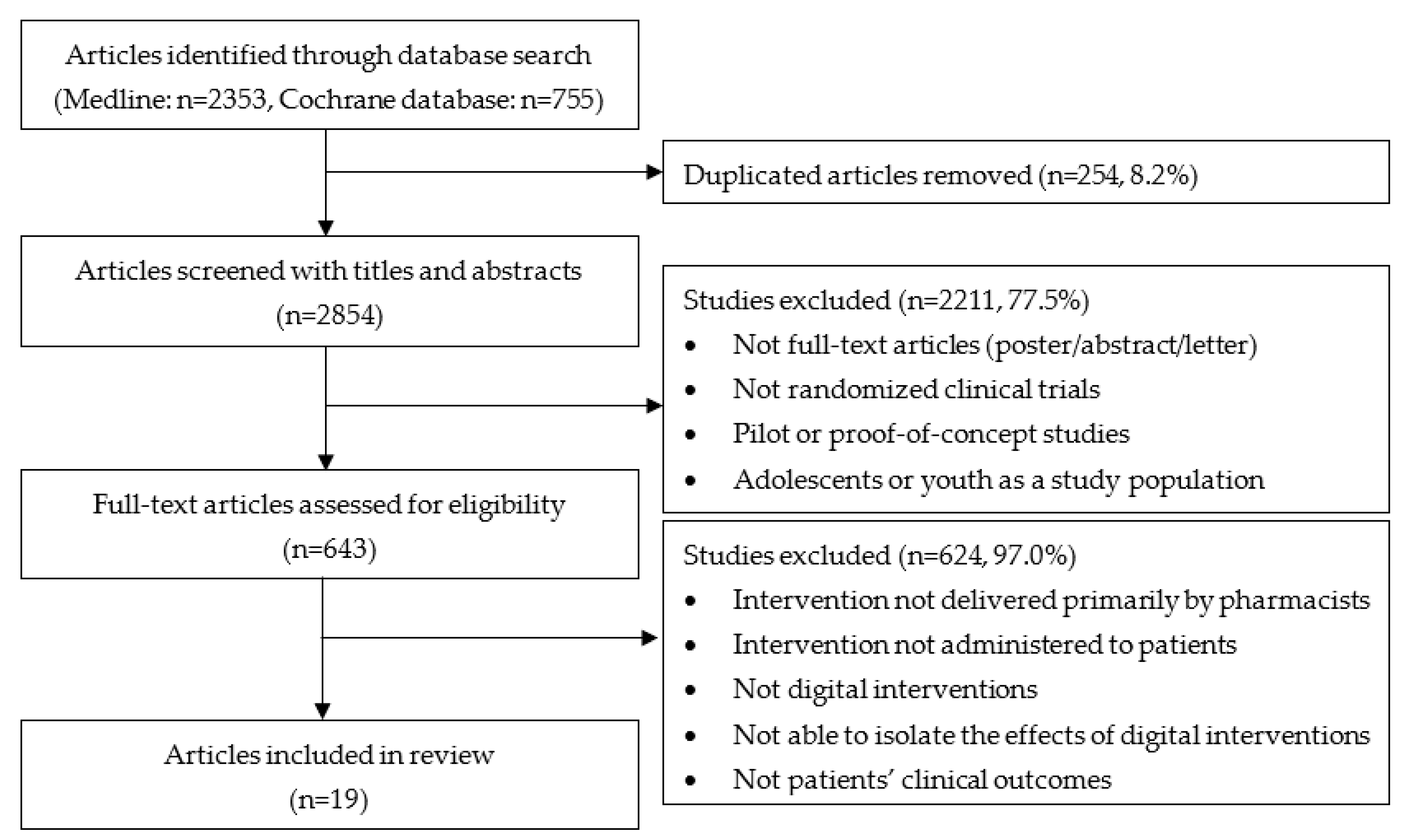
Figure 1 depicts a flowchart showing the procedure of selecting the relevant articles. Our database search identified 2353 and 755 articles from PubMed and the Cochrane Database, respectively. Later on removing duplicates, in that location was a total of 2854 unique manufactures. Titles and abstracts of these articles were reviewed for the commencement level of screening. Studies were excluded if (a) they were not total-text articles (e.g., poster or letter); (b) they did not include RCTs; (c) they were airplane pilot or proof-of-concept studies; and (d) the study populations did not include adults (i.e., adolescents or youth). This screening process resulted in the exclusion of 2211 articles. In the second level of screening, the remaining full-text manufactures were assessed for eligibility. Studies were excluded if (a) interventions were not delivered primarily past pharmacists; (b) interventions were not administered to patients; (c) digital interventions were not included; (d) the effects of the digital intervention were non able to be isolated; and (due east) clinical outcomes from patients were not measured. Post-obit discussions, nosotros determined to include articles if the study outcomes were healthcare service utilise (e.g., use of drug(due south), ED visit, hospitalization), adherence to medication or a clinical guideline, drug-related outcomes (east.yard., incidence and severity of adverse events), and health-related risk (east.g., CVD risk, smoking) because these outcomes could be strongly related to patients' clinical outcomes. Afterwards application of these exclusion criteria, only xix manufactures remained which were included in our assay.
Data from the 19 manufactures were extracted by two reviewers (TP and HK). Using these data, the reviewers created a template including the post-obit variables: writer(s) and year of publication; study blueprint (setting, subjects, intervention, control); result(s); and results.
To evaluate the methodological quality of the RCTs included in our review, we used the Jaded scale [15] and the PEDro calibration [xvi]. A score on the Jaded calibration (ranging from 0 to 5) is determined based on the level of randomization, blinding, and withdrawal/driblet-out in each RCT. A score of 0 to 1 indicates a high risk of methodological bias; a score of two to iii represents a moderate risk; and a score of 4 to 5 suggests a depression risk. Every bit the PEDro calibration was developed to evaluate physiotherapy clinical trials, we adjusted ane original item ("there was blinding of all therapists who administered the therapy") to the study context ("there was blinding of all pharmacists who administered the intervention") when assessing the quality of the studies included in our review. We considered a score of 0 to iii on the PEDro calibration to exist a high risk of bias; a score of 4 to half dozen to be a moderate adventure; and a score of seven to 10 to exist a low risk.
3. Results
Table 1 shows the summary of the included 19 studies. The majority of these studies were conducted in the U.S. (northward = 15). The types of digital interventions were telephone-based intendance (n = xv), web-based monitoring (n = ii), and mobile app use (due north = two). These interventions were provided to serve a wide range of purposes in patients' outcomes: change in lab values (e.g., claret pressure, HbA1c) (n = 23), reduction in wellness service utilise (n = viii), enhancing adherence to medication or a clinical guideline (n = half dozen), improvement in drug-related outcomes (n = 6), increase in survival (due north = 3), and reduction in health-related take chances (e.m., CVD run a risk, smoking) (northward = 2).
3.1. Telephone-Based Intervention
A total of 15 studies used a telephone every bit an intervention tool by clinical pharmacists. The impacts of the phone-based interventions on patients' outcomes were mixed. Of these fifteen studies, five studies reported significant effectiveness of the telephone interventions [17,18,xix,20,21]. Specifically, such interventions showed positive furnishings on lowering serum uric acid (sUA) levels among individuals with gout [17], the number of drug-related problems among those visiting outpatient cardiology clinics [18], mortality amongst those using five or more prescription drugs [19], and improved control of both BP [20] and international normalized ratio (INR) among patients discharged on warfarin [21]. Withal, five other studies showed no significant differences in outcomes between the handling group who received phone-based interventions and the control group receiving usual care [22,23,24,25,26]. Specifically, no pregnant differences were reported between these two groups in these studies with respect to the proportion of individuals who attempted tobacco cessation among tobacco users [22], adherence to cancer drug for about all cycles, overall survival (Os), and progression-free survival (PFS) among individuals with metastatic colorectal or gastric cancer [23], changes in HbA1c level and adherence to diabetic drugs [24], adherence to cardiovascular drugs and the percentage of those with LDL-C goal achievement among individuals with coronary heart disease (CHD) [25], and the proportion of emergency department (ED) visits and readmission to hospital inside 30 days of belch among those with cancer [26]. 5 studies revealed inconsistent effects of phone intervention on patients' outcomes [27,28,29,30,31]. In other words, the interventions in each of these studies resulted in comeback in some outcomes, merely not in others. For case, Bosworth et al. plant that phone intervention by clinical pharmacist specialists significantly reduced full cholesterol at 6 months in the handling group, but no significant differences were found in CVD adventure, sBP, dBP, LDL, HDL, BMI, HbA1c at six or 12 months, and total cholesterol at 12 months betwixt the treatment and the control groups [27]. In Carter et al.'s study, phone-based medication therapy direction (MTM) services significantly improved individuals' adherence to the American Heart Association (AHA)'s clinical guidelines, but their levels of BP, HbA1c, and lipids were not significantly different compared to those receiving usual care [28]. Similarly, Choudhry reported that phone-based consultation resulted in improvement in medication adherence, but the impacts of this phone intervention on affliction command based on LDL, sBP, HbA1c, hospitalization, and physician part visits were not significant [29]. Gernant et al. revealed no meaning differences in lx-day ED utilization between the handling group receiving phone-based MTM services and the control grouping receiving usual nursing care, but reported significantly lower ED use amongst individuals in the everyman risk quartile in the treatment group compared to the control group [30]. Zillich et al. as well demonstrated no significant differences in thirty-mean solar day and sixty-day hospitalizations between the phone-based MTM grouping and the usual dwelling care grouping, but plant significantly lower 30-day and 60-day hospitalizations among those in the lowest risk quartile in the handling group [31].
three.2. Web-Based Intervention
Two studies examined the impacts of web-based interventions by clinical pharmacists on patients' outcomes [32,33]. In both studies, the interventions exerted positive influences on most of the outcomes examined. In Light-green et al.'s study, the handling grouping received abode BP monitoring and web services as well as web-based communications with pharmacists while the control group received only either dwelling house BP monitoring plus web services or usual intendance [32]. This study establish pregnant improvements in most of the outcomes such every bit sBP, dBP, the per centum of individuals with controlled BP (<140/xc mmHg), and the number of antihypertensive agents and aspirin used in the treatment grouping. They found no pregnant differences merely in BMI change between the two groups. In Magid et al.'s study, the handling grouping received web-based BP monitoring and education by pharmacists whereas the control group received usual care [33]. They also reported significant improvements in most of the outcomes—i.e., achievement of BP goal, sBP, dBP, and antihypertensive medication intensity; however, adherence to antihypertensive medications was not significantly different between the two groups.
3.three. Mobile-Based Intervention
Two studies from the same clinical trial included a mobile-based intervention to investigate the impact of this intervention on patients' outcomes [34,35]. In this trial, a mobile app was developed to monitor and manage medication therapy for kidney transplant recipients. In these two studies, the intervention group received the mobile app-based intervention whereas the control grouping received usual care. The studies showed significant reductions in medication errors, incidences of form 3 or higher adverse events (AEs), hospitalization [34], and tacrolimus intrapatient variability (IPV) in the treatment group [35]. Still, no significant differences were establish in incidences of form 1 or 2 AEs and the infection rates between the two groups [35].
Overall, all the included studies were considered to have a low take chances of methodological bias (due north = 11 and 14) or a moderate methodological risk of bias (northward = 8 and 5) using the Jaded scale and PEDro calibration, respectively. That is, no written report was considered to have a high risk of methodological bias.
4. Give-and-take
We systematically reviewed studies that evaluated the impacts of clinical pharmacist-led digital interventions on patients' clinical outcomes. In these studies, clinical pharmacists used telephones, spider web tools, and mobile apps for their digital interventions. Overall, the impacts of telephone-based interventions in the studies were inconsistent: five studies showed benefits from these interventions, another five studies revealed no meaning effects, and the remaining five studies reported mixed effects from the interventions. Web-based interventions resulted in positive impacts on changes in lab values (e.k., sBP, dBP) and health service apply (eastward.g., antihypertensive drug and aspirin apply) in patients with hypertension. Clinical pharmacists' use of mobile apps significantly improved drug-related outcomes (eastward.one thousand., reduction in medication errors and astringent AEs) and wellness service use (e.k., reduction in hospitalizations) in kidney transplant recipients. When the study results were analyzed past the types of outcomes, we constitute that digital interventions were mostly constructive in lowering health service apply (e.g., hospitalization, drug employ) and improving drug-related outcomes (e.thou., medication errors, AEs). Nevertheless, they did not ever issue in meaning improvements in other outcomes such as changes in lab values, adherence, survival, and wellness-related risk.
Our study found that telephoning was the most frequently used intervention tool among clinical pharmacists. This result is consistent with earlier findings obtained from community pharmacists [14]. Our review institute that in xv out of 19 studies (78.9%), clinical pharmacists used a telephone as a digital intervention tool. Similarly, a previous study reported that nine out of 13 studies (69.2%) used a telephone as the digital intervention tool past customs pharmacists. As such, both clinical pharmacists and customs pharmacists used telephones as the most ordinarily used intervention tool. Telephone use represents a somewhat traditional arroyo of digital interventions. In just a express number of studies, other types of digital technology such equally mobile apps were used by clinical pharmacists [34,35] and community pharmacists [36]. No studies used social media, a wearable device, or video conferencing as a digital intervention by pharmacists. As noted previously, approximately 77% of medical school healthcare professionals and students reported using at least one mobile app regularly, with l% using their favorite app daily [5]. Physicians employ medical apps for many reasons such as searching relevant literature, accessing patient charts, submitting electronic prescriptions, and monitoring illness management [2,iii,4]. Pharmacists can also consider more novel technologies such as mobile apps, social media, and habiliment devices for their patients where pharmaceutical intendance is provided. By using more than diverse technologies, pharmacists could improve patients' outcomes in additional domains.
The current study'due south findings highlight a wide range of applications of clinical pharmacists' interventions to diverse study populations. The pharmacists provided their interventions to extensive populations such as patients with CHD, hypertension, hyperlipidemia, diabetes, cancer, gout, kidney conditions, tobacco use, using warfarin, and those using five or more than drugs for chronic conditions. Accordingly, the purposes of providing these interventions were likewise very comprehensive, ranging from improving lab values (e.1000., blood pressure, HbA1c), adherence, drug-related outcomes, and survival to lowering health service utilize and wellness-related risks. Of notation, community pharmacists used digital interventions to serve somewhat limited purposes. Crilly and Kayyali institute that community pharmacists' interventions focused primarily on improvement in medication counseling and adherence, which represents traditional roles of the community pharmacist [14]. Crilly et al. argued that customs pharmacists using more diverse technologies such as social media and mobile apps could aid ascertain their roles for more diverse outcomes/domains such as weight direction, sexual health, and booze use [37]. Findings from both our study and their study advise that digital interventions by clinical pharmacists are more likely to serve more than diverse purposes compared to those interventions past customs pharmacists. Nevertheless, community pharmacists are hands attainable professionals who routinely meet people in their community. In this sense, digital intendance services are conveniently designed and efficiently delivered by community pharmacists, which tin can ultimately outcome in positive outcomes for patients.
Although digital interventions have gained increasing popularity, there has been petty investigation into the cost-effectiveness (CE) of these interventions. Accordingly, whether a digital intervention is cost-constructive remains to exist elucidated. For case, Pyne et al. investigated the cost-effectiveness of a telemedicine-based collaborative care intervention for individuals with low in rural areas [38]. They found the incremental toll-effectiveness ratio (ICER) of this intervention to be almost $86,000/quality-adjusted life year (QALY) gained, which suggests that the intervention may or may not be cost-effective depending on the cost-effectiveness threshold. Another written report conducted past Painter et al. evaluated the toll-effectiveness of telemedicine-based collaborative treat veterans with posttraumatic stress disorder (PTSD) in rural areas [39]. The ICER for the telemedicine intervention was well-nigh $186,000/QALY gained. This ICER value was higher than the conventionally reported cost-effectiveness thresholds of $50,000–$150,000/QALY gained, deeming the intervention cost-ineffective. However, their analyses focusing on patient subgroups with comorbidities such as low, anxiety, and panic disorder concluded that this intervention was cost-saving for these groups. Regarding the CE study of a pharmacist-led intervention, Avery et al. performed a price-effectiveness analysis of a pharmacist's information technology intervention composed of feedback, educational outreach, and defended support for individuals with medication errors [40]. Their analysis resulted in an ICER of £66/medication error avoided. As they did not quantify the economic effects on patients' quality of life, the ICER with the QALY gained could not be generated. Thus, they were not able to assess whether the ICER with medication errors avoided for this intervention would be considered toll-effective according to the policy decision rules in England that crave the ICER with the QALY gained.
To our knowledge, this is the get-go systematic review of the impacts of digital interventions by clinical pharmacists on patients' outcomes. Our review demonstrated that a clinical pharmacist-led digital intervention has the potential to benefit patients. There are several limitations to this report. First, because we included just articles published in English, there may exist choice bias. If prior studies be published in not-English languages, a future review could consider including these studies. 2nd, we were not able to pool different outcomes quantitatively because of heterogeneity inherent to these outcomes. Therefore, we narrated the findings of the studies qualitatively. In addition, virtually of the included studies were conducted in the U.South., which could limit the generalizability of the study findings. Finally, although we endeavored not to miss any relevant articles by post-obit the recommendations of the Preferred Reporting Items for Systematic Reviews and Meta-Analyses (PRISMA) argument, there may have been articles not captured by our search with the two databases employed in this study.
In summary, clinical pharmacists' digital interventions were limited to the use of telephones, web tools, and mobile apps. In futurity studies, clinical pharmacists should consider novel technologies such every bit social media and wearable devices for patients who receive pharmaceutical care. Additionally, hereafter studies demand to be carefully designed by taking the contents of the intervention and the report population into account because these aspects are strongly related to the outcomes of the intervention.
5. Conclusions
Previous studies have shown that the phone has been the well-nigh commonly used intervention tool among clinical pharmacists, followed by spider web-based interventions and mobile apps. Our review found that the impacts of telephone-based interventions on patients' outcomes were not consequent. Therefore, pharmacists should exist prudent in developing a phone-based intervention past considering, for example, the report population, the construction of the intervention, and the contents delivered past the intervention. Impacts of web-based interventions and mobile apps were mostly positive, which suggests the benefits of continued use of these tools. However, more studies are warranted because of the express studies using these tools as interventions. Additionally, only express evidence exists regarding the cost-effectiveness of digital interventions. Therefore, futurity research is needed to first identify the economic value of the interventions and and then implement the cost-effective interventions.
Author Contributions
Conceptualization, T.P. and J.G.; methodology, T.P., J.M. and H.K.; literature review, T.P. and H.Thousand.; analysis, T.P. and H.K.; writing—original draft preparation, T.P. and J.M.; writing—review and editing, T.P. and J.K.; supervision, T.P.; project administration, T.P. All authors have read and agreed to the published version of the manuscript.
Funding
This enquiry received no external funding.
Institutional Review Lath Statement
Not applicable.
Informed Consent Argument
Non applicable.
Data Availability Statement
Not applicable.
Conflicts of Interest
The authors declare no conflict of interest.
References
- Sheth, North.; Kane, Y.I. Smart-phone makers call the doctor. Wall Str. J. 2009. Bachelor online: https://www.wsj.com/manufactures/SB125487806705169673 (accessed on 6 September 2021).
- Folio, D. Engineering science: Cell phones are quickly becoming cut-border medical devices. Hosp. Health Netw. 2008, 82, 13. [Google Scholar] [PubMed]
- Hardy, K. Physicians Network Uses Wireless IT to Improve Home-Based Care. Healthcare IT News. Available online: https://www.healthcareitnews.com/news/physicians-network-uses-wireless-it-meliorate-abode-based-care (accessed on 10 September 2021).
- Putzer, G.J.; Park, Y. Are physicians likely to prefer emerging mobile technologies? Attitudes and innovation factors affecting smartphone utilize in the Southeastern U.s.a.. Perspect. Health Inf. Manag. 2012, nine, one–22. [Google Scholar]
- Wallace, S.; Clark, M.; White, J. 'It'south on my iPhone': Attitudes to the use of mobile computing devices in medical education, a mixed-methods study. BMJ Open 2012, ii, e001099. [Google Scholar] [CrossRef]
- Bevilacqua, R.; Casaccia, Due south.; Cortellessa, Thousand.; Astell, A.; Lattanzio, F.; Corsonello, A.; D'Ascoli, P.; Paolini, South.; Di Rosa, M.; Rossi, Fifty.; et al. Coaching through technology: A systematic review into efficacy and effectiveness for the ageing population. Int. J. Environ. Res. Public Health 2020, 17, 5930. [Google Scholar] [CrossRef]
- Bevilacqua, R.; Strano, S.; Di Rosa, M.; Giammarchi, C.; Cerna, K.K.; Mueller, C.; Maranesi, E. eHealth literacy: From theory to clinical application for digital health improvement. Results from the ACCESS training experience. Int. J. Environ. Res. Public Health 2021, 18, 11800. [Google Scholar] [CrossRef] [PubMed]
- Aungst, T.D. Medical applications for pharmacists using mobile devices. Ann. Pharmacother. 2013, 47, 1088–1095. [Google Scholar] [CrossRef]
- Dasgupta, A.; Sansgiry, S.S.; Sherer, J.T.; Wallace, D.; Sikri, South. Pharmacists' utilization and interest in usage of personal digital administration in their professional responsibilities. Wellness Info. Libr. J. 2010, 27, 37–45. [Google Scholar] [CrossRef]
- Dasgupta, A.; Sansgiry, S.S.; Sherer, J.T.; Wallace, D.; Sikri, Due south. Application of the extended technology acceptance model in predicting pharmacists' intention to use personal digital assistants. J. Am. Pharm. Assoc. 2009, 49, 792–798a. [Google Scholar] [CrossRef]
- Fox, B.I.; Felkey, B.One thousand.; Berger, B.A.; Krueger, Grand.P.; Rainer, R.K., Jr. Use of personal digital assistants for documentation of pharmacists' interventions: A literature review. Am. J. Health Syst. Pharm. 2007, 64, 1516–1525. [Google Scholar] [CrossRef]
- Felkey, B.; Play tricks, B.I. Emerging technology at the betoken of care. J. Am. Pharm. Assoc. 2003, 43 (Suppl. S1), S50–S51. [Google Scholar]
- ScriptPro Telepharmacy Website. Available online: https://world wide web.scriptpro.com (accessed on i Oct 2021).
- Crilly, P.; Kayyali, R. A systematic review of randomized controlled trials of telehealth and digital engineering science use by customs pharmacists to better public health. Pharmacy 2020, 8, 137. [Google Scholar] [CrossRef] [PubMed]
- Jadad, A.R.; Moore, R.A.; Carroll, D.; Jenkinson, C.; Reynolds, D.J.M.; Gavaghan, D.J.; McQuay, H.J. Assessing the quality of reports of randomized clinical trials: Is blinding necessary? Control. Clin. Trials 1996, 17, 1–12. [Google Scholar] [CrossRef]
- Maher, C.Yard.; Sherrington, C.; Herbert, R.D.; Moseley, A.M.; Elkins, M. Reliability of the PEDro scale for rating quality of randomized controlled trials. Phys. Ther. 2003, 83, 713–721. [Google Scholar] [CrossRef] [PubMed]
- Goldfien, R.; Pressman, A.; Jacobson, A.; Ng, M.; Avins, A. A pharmacist-staffed, virtual gout direction clinic for achieving target serum uric acid levels: A randomized clinical trial. Perm. J. 2016, 20. [Google Scholar] [CrossRef]
- Huiskes, V.J.B.; van den Ende, C.H.Grand.; Kruijtbosch, M.; Ensing, H.T.; Meijs, M.; Meijs, V.M.G.; Burger, D.K.; van den Bemt, B.J.F. Effectiveness of medication review on the number of drug-related bug in patients visiting the outpatient cardiology clinic: A randomized controlled trial. Br. J. Clin. Pharmacol. 2020, 86, 50–61. [Google Scholar] [CrossRef]
- Wu, J.Y.; Leung, W.Y.; Chang, S.; Lee, B.; Zee, B.; Tong, P.C.; Chan, J.C. Effectiveness of phone counselling by a pharmacist in reducing mortality in patients receiving polypharmacy: Randomised controlled trial. BMJ 2006, 333, 522. [Google Scholar] [CrossRef]
- Margolis, K.L.; Asche, Southward.E.; Bergdall, A.R.; Dehmer, S.P.; Groen, Due south.East.; Kadrmas, H.M.; Kerby, T.J.; Klotzle, Thousand.J.; Maciosek, Chiliad.V.; Michels, R.D.; et al. Effect of home blood pressure level telemonitoring and pharmacist management on blood force per unit area control: A cluster randomized clinical trial. JAMA 2013, 310, 46–56. [Google Scholar] [CrossRef]
- Sudas Na Ayutthaya, N.; Sakunrak, I.; Dhippayom, T. Clinical outcomes of telemonitoring for patients on warfarin after discharge from hospital. Int. J. Telemed. Appl. 2018, 2018. [Google Scholar] [CrossRef]
- Adams, J.; Cymbala, A.A.; Delate, T.; Kurz, D.; Olson, K.Fifty.; Youngblood, M.; Zadvorny, Due east. Cluster-randomized trial of clinical pharmacist tobacco cessation counseling among patients with cardiovascular disease. Popul. Health Manag. 2015, 18, 300–306. [Google Scholar] [CrossRef]
- Eldeib, H.K.; Abbassi, M.Chiliad.; Hussein, G.M.; Salem, S.East.; Sabry, N.A. The Effect of phone-based follow-up on adherence, efficacy, and toxicity of oral capecitabine-based chemotherapy. Telemed. E-Wellness 2019, 25, 462–470. [Google Scholar] [CrossRef]
- Lauffenburger, J.C.; Ghazinouri, R.; January, Due south.; Makanji, Due south.; Ferro, C.A.; Lewey, J.; Wittbrodt, Due east.; Lee, J.; Haff, Due north.; Fontanet, C.P.; et al. Impact of a novel pharmacist-delivered behavioral intervention for patients with poorly-controlled diabetes: The ENhancing outcomes through Goal Assessment and Generating Date in Diabetes Mellitus (ENGAGE-DM) businesslike randomized trial. PLoS ONE 2019, fourteen, e0214754. [Google Scholar] [CrossRef] [PubMed]
- Ma, Y.; Ockene, I.S.; Rosal, M.C.; Merriam, P.A.; Ockene, J.K.; Gandhi, P.J. Randomized trial of a pharmacist-delivered intervention for improving lipid-lowering medication adherence among patients with coronary eye illness. Cholesterol 2010, 2010. [Google Scholar] [CrossRef] [PubMed]
- Salmany, S.Due south.; Ratrout, L.; Amireh, A.; Agha, R.; Nassar, Northward.; Mahmoud, N.; Rimawi, D.; Nazer, 50. The affect of chemist telephone calls afterwards discharge on satisfaction of oncology patients: A randomized controlled study. J. Oncol. Pharm. Pract. 2018, 24, 359–364. [Google Scholar] [CrossRef]
- Bosworth, H.B.; Olsen, K.G.; McCant, F.; Stechuchak, K.M.; Danus, S.; Crowley, M.J.; Goldstein, One thousand.M.; Zullig, L.50.; Oddone, East.Z. Telemedicine cardiovascular chance reduction in veterans: The CITIES trial. Am. Heart J. 2018, 199, 122–129. [Google Scholar] [CrossRef] [PubMed]
- Carter, B.L.; Levy, B.; Gryzlak, B.; Xu, Y.; Chrischilles, E.; Dawson, J.; Weg, M.Five.; Christensen, A.; James, P.; Polgreen, L. Cluster-randomized trial to evaluate a centralized clinical chemist's service in private family unit medicine offices. Circ. Cardiovasc. Qual. Outcomes 2018, 11, e004188. [Google Scholar] [CrossRef]
- Choudhry, Northward.Thou.; Isaac, T.; Lauffenburger, J.C.; Gopalakrishnan, C.; Lee, Yard.; Vachon, A.; Iliadis, T.L.; Hollands, W.; Elman, S.; Kraft, J.M.; et al. Effect of a remotely delivered tailored multicomponent arroyo to heighten medication taking for patients with hyperlipidemia, hypertension, and diabetes: The STIC2IT cluster randomized clinical trial. JAMA Intern. Med. 2018, 178, 1182–1189. [Google Scholar] [CrossRef]
- Gernant, S.A.; Snyder, M.E.; Jaynes, H.; Sutherland, J.M.; Zillich, A.J. The effectiveness of pharmacist-provided telephonic medication therapy management on emergency department utilization in home health patients. J. Pharm. Technol. 2016, 32, 179–184. [Google Scholar] [CrossRef]
- Zillich, A.J.; Snyder, Yard.E.; Frail, C.Yard.; Lewis, J.L.; Deshotels, D.; Dunham, P.; Jaynes, H.A.; Sutherland, J.M. A randomized, controlled pragmatic trial of telephonic medication therapy management to reduce hospitalization in home health patients. Health Serv. Res. 2014, 49, 1537–1554. [Google Scholar] [CrossRef]
- Dark-green, B.B.; Cook, A.J.; Ralston, J.D.; Fishman, P.A.; Catz, Southward.Fifty.; Carlson, J.; Carrell, D.; Tyll, L.; Larson, E.B.; Thompson, R.Southward. Effectiveness of dwelling house claret pressure monitoring, Web communication, and chemist care on hypertension control: A randomized controlled trial. JAMA 2008, 299, 2857–2867. [Google Scholar] [CrossRef]
- Magid, D.J.; Olson, 1000.L.; Billups, Southward.J.; Wagner, Due north.Thousand.; Lyons, E.E.; Kroner, B.A. A chemist-led, American Heart Association Heart360 Spider web-enabled home blood pressure monitoring plan. Circ. Cardiovasc. 2013, 6, 157–163. [Google Scholar] [CrossRef]
- Gonzales, H.M.; Fleming, J.Due north.; Gebregziabher, M.; Posadas-Salas, M.A.; Su, Z.; McGillicuddy, J.W.; Taber, D.J. Pharmacist-led mobile wellness intervention and transplant medication safety: A randomized controlled clinical trial. Clin. J. Am. Soc. Nephrol. 2021, 16, 776–784. [Google Scholar] [CrossRef]
- Fleming, J.N.; Gebregziabher, M.; Posadas, A.; Su, Z.; McGillicuddy, J.W.; Taber, D.J. Impact of a pharmacist-led, mHealth-based intervention on tacrolimus trough variability in kidney transplant recipients: A report from the TRANSAFE Rx randomized controlled trial. Am. J. Health Syst. Pharm. 2021. [Google Scholar] [CrossRef]
- Kosse, R.C.; Bouvy, M.L.; de Vries, T.W.; Koster, E.Southward. Effect of a mHealth intervention on adherence in adolescents with asthma: A randomized controlled trial. Respir. Med. 2019, 149, 45–51. [Google Scholar] [CrossRef] [PubMed]
- Crilly, P.; Jair, S.; Mahmood, Z.; Moin Khan, A.; Munir, A.; Osei-Bediako, I.; Samir, M.; Kayyali, R. Public views of unlike sources of health advice: Pharmacists, social media and mobile health applications. Int. J. Pharm. Pract. 2019, 27, 88–95. [Google Scholar] [CrossRef] [PubMed]
- Pyne, J.M.; Fortney, J.C.; Tripathi, S.P.; Maciejewski, Thou.50.; Edlund, M.J.; Williams, D.K. Price-effectiveness analysis of a rural telemedicine collaborative intendance intervention for depression. Arch. Gen. Psychiatry 2010, 67, 812–821. [Google Scholar] [CrossRef] [PubMed]
- Painter, J.T.; Fortney, J.C.; Austen, M.A.; Pyne, J.One thousand. Cost-effectiveness of telemedicine-based collaborative care for posttraumatic stress disorder. Psychiatr. Serv. 2017, 68, 1157–1163. [Google Scholar] [CrossRef] [PubMed]
- Avery, A.J.; Rodgers, S.; Cantrill, J.A.; Armstrong, Southward.; Cresswell, G.; Eden, M.; Elliott, R.A.; Howard, R.; Kendrick, D.; Morris, C.J.; et al. A pharmacist-led information technology intervention for medication errors (PINCER): A multicentre, cluster randomised, controlled trial and cost-effectiveness analysis. Lancet 2012, 379, 1310–1319. [Google Scholar] [CrossRef]
Figure one. Flowchart of the search strategy and selection of articles.
Figure 1. Flowchart of the search strategy and selection of articles.
Tabular array 1. Characteristics of the manufactures evaluating digital interventions past clinical pharmacists.
Table i. Characteristics of the manufactures evaluating digital interventions by clinical pharmacists.
| Author (Twelvemonth) | Setting (Duration and Location) | Subject area | Intervention (n, Mean Age, %Female) | Control (n, Hateful Historic period, %Female) | Outcomes | Result | Take a chance of Bias Using the Jaded/PEDro Scales |
|---|---|---|---|---|---|---|---|
| Telephone-based intervention | |||||||
| Adams et al. (2015) [22] | Iii months, privately insured population in the U.S. | Tobacco users who were enrolled in Clinical Pharmacy Cardiac Chance Service (CPCRS) | Phone-based counseling (north = 64, 66.6, 43.viii%) | Usual intendance (n = 56, 64.6, 28.6%) | Primary: Proportion of individuals who reported a tobacco cessation endeavor during follow-up Secondary: Proportion of individuals who had (1) at to the lowest degree i contact with a telephone counseling service; (ii) purchased at to the lowest degree one tobacco cessation medication aid; and (3) attended at least one tobacco cessation program or webinar | Chief: No significant difference in tobacco cessation attempt between the treatment and the command groups (38.half-dozen% vs. 36.2%, p = 0.804) Secondary: No pregnant difference between the two groups in the proportion of individuals who had (1) at least one contact with a phone counseling service (0.0% vs. 5.four%, p = 0.099); (2) purchased at least i tobacco abeyance medication assist (10.9% vs. 19.six%, p = 0.183); and (three) attended at least one tobacco cessation programme or webinar (1.six% vs. 0.0%, p = 0.348) | Low/Low |
| Bosworth et al. (2018) [27] | 12 months, a veterans' medical center in the U.S. | Patients with hypertension and/or hypercholesterolemia | Telehealth intervention by clinical pharmacist specialists (due north = 215, 60.9, fifteen.3%) | Educational control (n = 213, 61.5, 15.0%) | Primary: Framingham cardiovascular disease (CVD) hazard score at half-dozen and 12 months Secondary: systolic blood pressure (sBP), diastolic blood pressure (dBP), total cholesterol, low-density lipoprotein (LDL), high-density lipoprotein (HDL), torso mass alphabetize (BMI), HbA1c (for those w/diabetes) at vi and 12 months | Primary: No pregnant differences in Framingham CVD risk score, sBP, dBP, LDL, HDL, BMI, HbA1c at 6 or 12 months and total cholesterol at 12 months Secondary: Significant decline in total cholesterol at 6 months in the treatment group compared to the control group (divergence: −vii.0, 95%CI: −xiii.4 to −0.6, p = 0.03) | Moderate/Moderate |
| Carter et al. (2018) [28] | 12 months, physician offices and wellness centers in the U.S. | Patients with diabetes or hypertension | Telephone-based medication therapy management (MTM) (n = 149, 63.vii, 46.iii%) | Usual care (n = 153, 64.ane, 52.9%) | Chief: Adherence to the American Middle Association (AHA)'due south guideline developed for individuals with CV atmospheric condition Secondary: Changes in central CV take chances factors such as claret pressure, HbA1c, and lipids | Primary: Significant improvement in adherence to the guideline only in the treatment group (p = 0.02) Secondary: No significant differences in the secondary outcomes between the treatment group and the command group (p-values ranging from 0.06 to 0.73) | Moderate/Moderate |
| Choudhry (2018) a [29] | 12 months, main care practice sites in the U.S. | Patients with hyperlipidemia, hypertension, and diabetes | Phone-based consultation (north = 2038, 60.4, 45.3%) | Usual care (northward = 2040, 59.2, 45.0%) | Primary: Medication adherence measured by proportion of days covered (PDC) Secondary: (1) Disease control based on achieved levels of LDL, sBP, and HBA1c for at least one condition and all weather too every bit (2) healthcare service employ | Primary: Significantly college improvement in medication adherence in the treatment group compared to the control grouping (difference = 4.vii%, 95% CI: iii.0–6.4%) Secondary: No pregnant difference between the two groups in (ane) achieving illness control for at least one condition (OR = 1.x, 95% CI:0.94–i.28) and all conditions (OR = 1.05, 95% CI: 0.91–1.22) as well as (ii) hospitalization (OR = i.02, 95% CI: 0.78–one.34) and physician office visits (OR = 1.11, 95% CI: 0.91–i.36) Significantly fewer emergency department visits in the treatment group compared to the control group (OR = 0.62, 95% CI: 0.45–0.85) | Low/Low |
| Eldeib et al. (2018) b [23] | 12 months, National Cancer Institute in Egypt | Patients with metastatic colorectal or gastric cancer | Follow-up phone phone call during the handling cycles (i.e., from bike ane to cycle 12) (n= 44, 50.0, 63.6%) | Standard care (n = 38, 44.8, 63.2%) | Chief: Medication adherence measured by the pill count method Secondary: Overall survival (OS) and progression-free survival (PFS) | Master: No significant difference in medication adherence between the treatment grouping and the control group for all cycles (98.99% vs. 96.83%, p = 0.354) except for the 11th wheel (100% vs. 92.86%, p = 0.046) Secondary: No significant deviation between the two groups in the median Os (10.13 in the handling group vs. 8.ten in the control group, p = 0.84) and the median PFS (5.twenty in the treatment group vs. six.13 in the control group, p = 0.48) | Moderate/Moderate |
| Gernant et al. (2016) [30] | Two months, home health population in the U.Due south. | Medicare-insured patients admitted to the abode health agencies (HHAs) | Telephone-based MTM (n = 297, 71, 58%) | Usual nursing care (due north = 359, 73, 61%) | 60-day all-cause emergency department (ED) utilization | No meaning deviation in 60-day ED utilization (24.4% in the treatment group vs. 25.ane% in the control group, 95% CI: 0.79–1.57) However, significantly lower ED utilization among patients in the lowest chance quartile for the treatment group (OR = 2.52, 95% CI: 1.15–5.49, p = 0.02) | Low/Low |
| Goldfien et al. (2016) [17] | Six months, Kaiser Permanent Northern California patient population in USA | Patients with gout | Telephone-based plan (n = 37, threescore.9, 2.seven%) | Usual care (northward = xl, 58.0, xx.0%) | Primary: Accomplishment of a serum uric acid (sUA) level of 6.0 mg/dL or beneath Secondary: Mean change in sUA levels | Primary: Higher percent of achievement of sUA level at or below 6.0 mg/dL in the treatment group compared to the command group (35% vs. 13%, p = 0.03) Secondary: Significant alter in mean sUA levels in the treatment grouping compared to the control group (−1.5 mg/dL vs. 0.one mg/dL, p < 0.001) | Moderate/Moderate |
| Huiskes et al. (2019) [18] | One month, hospitals in the Netherlands | Patients visiting outpatient cardiology clinics | Telephone phone call (north = 90, 65.8, 44.4%) | Usual care (n = 85, 66.2, 37.vi%) | Number of drug-related issues (DRPs) ane month after visiting the cardiologist | Significant reduction in the number of DRPs in the handling group compared to the control group (0.three vs. 0.8, p < 0.001) | Moderate/Moderate |
| Lauffenburger et al. (2019) c [24] | 12 months, privately insured population in the U.S. | Patients with diabetes | Telephone-based consultation (northward = 700, 54.ix, 34.half-dozen%) | Usual care (n = 700, 54.6, 39.viii%) | Chief: Change in HbA1c from baseline Secondary: (ane) Proportion of patients achieving HbA1c < 8%, and (2) medication adherence measured by PDC | Primary: No pregnant divergence in HbA1c modify between the two groups (difference = 0.06, 95% CI: −0.20 to 0.32) Secondary: (1) No meaning deviation in the proportion of those achieving HbA1c < 8% betwixt the two groups (OR = 0.91, 95% CI: 0.71–1.17) (2) No pregnant difference in medication adherence between the two groups (OR = 0.92, 95% CI: 0.72–1.17) | Low/Low |
| Ma et al. (2010) [25] | 12 months, medical center in the U.South. | Patients with coronary heart disease (CHD) | Phone-based counseling (north = 351, 60.4, 40.2%) | Usual care (due north = 338, 60.3, 40.2%) | Chief: Percentage of patients with a serum LDL-C <100 mg/dL Secondary: Proportion of adherence to statin medication | Primary: No meaning difference in the percent of individuals with LDL-C <100 mg/dL betwixt the handling and control groups (65% vs. lx%, p = 0.29) Secondary: No significant difference in adherence to statin in the two groups (0.88 vs. 0.90, p = 0.51) | Moderate/Low |
| Margolis et al. (2013) d [xx] | Six to eighteen months, main intendance clinics in the U.S. | Patients with hypertension | Telemonitoring (due north = 228, 62.0, 45.two%) | Usual care (n = 222, 60.2, 44.1%) | Primary: Command of BP (sBP < 140 mmHg and dBP < 90 mmHg) at 6 and 12 months Secondary: BP control and change in BP at 18 months | Master: Significant improvement in BP command in the treatment grouping compared to the control group at six or 12 months (all p-values < 0.001) Secondary: Significant improvement in the handling grouping in BP control (p = 0.003) and sBP (p = 0.004), only marginally insignificant in dBP (p = 0.07) at 18 months | Depression/Depression |
| Salmany et al. (2017) [26] | One month, cancer middle in the U.S. | Patients with cancer who were discharged from inpatient services | Follow-upwardly telephone phone call later on infirmary discharge (n = 166, 47.2, 54.3%) | No follow-up telephone call (n = 166, 49.two, 52.4%) | ED visits and readmission to hospital within 30 days of discharge | No significant differences between the treatment grouping and the control groups in ED visit (44% vs. 52%, p = 0.123) and hospital readmission (37% vs. 43%, p = 0.317) inside 30 days of discharge | Low/Depression |
| Sudas Na Ayutthaya et al. (2018) [21] | Three months, hospital in Thailand | Patients prescribed warfarin upon discharge | Call (north = 25, 56.6, 72%) | Standard chemist's shop services (n = 25, 58.7, 48%) | (ane) Proportion of international normalized ratio (INR) values in range, (2) proportion of INR out of range, (3) percent of patients with one or more than out-of-range INR values, and (4) fourth dimension in therapeutic range (TTR) | (i) Significantly higher proportion of INR values in range in the handling grouping compared to the command group (45.6% vs. 24.ane%, p = 0.005) (ii) Significantly lower proportion of INR out of range in the treatment group compared to the control group (11.4% vs. 24.1%, p = 0.037) (3) Significantly lower percent of those with one or more than out-of-range INR values in the treatment group compared to the control group (84% vs. 100%, p = 0.037) (four) Significantly higher mean TTR in the handling group compared to the control group (49.8 vs. 28.0, p = 0.017) | Moderate/Low |
| Wu et al. (2006) [nineteen] | Three months, hospital in Hong Kong | Clinically stable patients with prescription of v or more drugs on at least two consecutive visits to dispensary | Telephone call midpoint betwixt the two clinic visits (n = 219, 71.2, 51.0%) | No phone telephone call(n = 223, 70.5, 52.0%) | All-crusade mortality | Significant reduction in bloodshed in the treatment grouping compared to the control group (relative adventure = 0.59, 95% CI: 0.35–0.97, p = 0.039) | Low/Low |
| Zillich et al. (2014) [31] | Two months, dwelling house healthcare centers in the U.S. | Medicare-insured home healthcare patients | Telephone-based MTM (due north = 415, 73, 58%) | Usual home healthcare (n = 480, 73, 62%) | Primary: 60-day all-cause hospitalization Secondary: xxx-day all-crusade hospitalization | Chief: No significant deviation in 60-mean solar day all-cause hospitalization between the 2 groups (p = 0.19) Yet, significant lower sixty-twenty-four hours hospitalization in the lowest baseline risk quartile for the treatment group (p = 0.01) Secondary: No pregnant difference in thirty-day all-cause hospitalization betwixt the ii groups (p = 0.30) Nevertheless, significant lower xxx-solar day hospitalization in the lowest risk quartile for the treatment group (p = 0.01) | Low/Low |
| Web-based intervention | |||||||
| Green et al. (2008) [32] | 12 months, medical centers in the U.S. | Patients with hypertension lone (no diagnosis of diabetes, CV or renal illness, or other serious conditions) | Spider web-based communications with a pharmacist and home BP monitoring and admission to patient web services (due north = 261, 59.3, 55.9%) | CTRL 1: Home BP monitoring and access to patient web services (n = 259, 59.v, 45.nine%)CTRL ii: Usual care(n = 258, 58.6, 54.7%) | Principal: Changes in sBP, dBP, and the percentage of patients with controlled BP (<140/ninety mmHg) Secondary: Changes in the number of antihypertensive medications, aspirin use, and BMI | Primary: Significant improvement in changes in sBP, dBP, and the percent with controlled BP in the treatment group compared to the control groups (all p-values < 0.001) Secondary: Significantly more reductions in the number of antihypertensive agents and aspirin use in the handling group compared to the control groups (all p-values < 0.05) However, no significant difference in BMI change between the treatment group and the control groups (difference: −0.ix, 95% CI: −two.ane to 0.3) | Depression/Low |
| Magid et al. (2013) [33] | Six months, privately insured population in the U.Due south. | Patients with hypertension | Web-based blood pressure monitoring and education (north = 175, 60.0, 38.iii%) | Usual care (n = 173, 59.1, 41.0%) | Primary: Proportion of patients who attained their goal BP Secondary: Changes in sBP, dBP, antihypertensive medication intensity, and antihypertensive medication adherence measured past medication possession ratio (MPR) | Principal: Significantly higher proportion of patients achieving BP goal in the treatment group compared to the control grouping (RR = 1.five, 95% CI: ane.2–1.ix) Secondary: Significantly higher changes in sBP, dBP, and antihypertensive medication intensity in the treatment group (all p-values < 0.01) No significant difference in MPR between the two groups (0.86 in the treatment group vs. 0.87 in the control group, p = 0.98) | Low/Depression |
| Mobile-based intervention | |||||||
| Fleming et al. (2021) [35] | 12 months, university medical center in the U.S. | Kidney transplant recipients | Mobile application for monitoring and managing medication therapy (northward = 68, fifty.two, 48.5%) | Usual care (n = 68, 51.2, 38.2%) | Intrapatient variability (IPV) | Meaning subtract in tacrolimus IPV in the treatment grouping compared to control group (p = 0.01) | Moderate/Depression |
| Gonzales et al. (2021) [34] | 12 months, university medical middle in the U.Due south. | Kidney transplant recipients | Mobile application for monitoring and managing medication therapy (n = 68, fifty, 49%) | Usual care (n = 68, 51, 38%) | Primary: Incidence and severity of medication errors and agin events (AEs) Secondary: Infections and hospitalizations | Primary: Pregnant reduction in medication errors in the treatment group compared to the control group (incidence take a chance ratio (IRR) = 0.39, 95% CI: 0.28–0.55) No meaning deviation in incidence of class 1 or grade two AEs betwixt the 2 groups, simply a significantly lower incidence of grade 3 or college AEs in the treatment group (IRR = 0.55, 95% CI: 0.30–0.99) Secondary: No pregnant deviation in infection rates between the two groups, but a significantly lower rate of hospitalizations in the treatment group (IRR = 0.46, 95% CI: 0.27–0.77) | Depression/Depression |
| Publisher'due south Notation: MDPI stays neutral with regard to jurisdictional claims in published maps and institutional affiliations. |
© 2022 by the authors. Licensee MDPI, Basel, Switzerland. This article is an open access article distributed under the terms and conditions of the Creative Commons Attribution (CC By) license (https://creativecommons.org/licenses/by/4.0/).
DOWNLOAD HERE
Posted by: lowelarnersour.blogspot.com

